Launch failures

Soyuz MS-10BurlakRussia |
 |
 |
Launch, orbit and landing data
walkout photo |
 |
|||||||||||||||||||
alternative crew photo |
alternative crew photo |
|||||||||||||||||||
alternative crew photo |
alternative crew photo |
|||||||||||||||||||
alternative crew photo |
alternative crew photo |
|||||||||||||||||||
Crew
| No. | Surname | Given names | Position | Flight No. | Duration | |
| 1 |  |
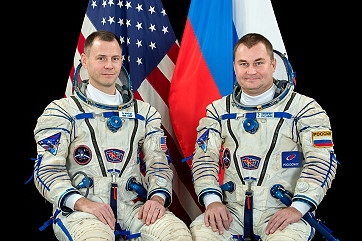
Ovchinin | Aleksei Nikolaevich | Commander | 2 | 19m 40s |
| 2 |  |
Hague | Tyler Nicklaus "Nick" | Flight Engineer | 1 | 19m 40s |
Crew seating arrangement
|
 |
|
||||||||||||||||
Backup Crew
 |
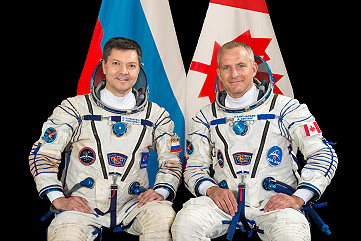
alternative crew photoalternative crew photo |
|||||||||||||||

Hardware
| Launch vehicle: | Soyuz-FG (No. 11M137S U15000-062) |
| Spacecraft: | Soyuz MS-10 (MS No. 740) |
Flight
|
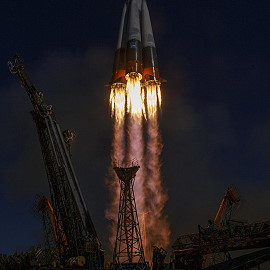
Launch from the Baikonur Cosmodrome. Landing
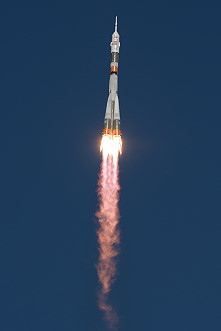
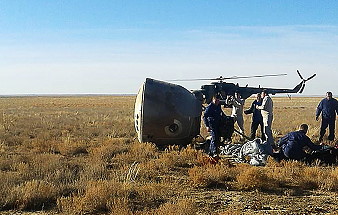
32 km southeast of Dzhezkasgan. It was intended to transport two members of the ISS Expedition 57 crew to the International Space Station. About 121.57 seconds after liftoff, the craft went into contingency abort due to a sensor failure and had to return to Earth into a "ballistic descent". Both crew members, were recovered alive in good health. The Soyuz MS-10 flight abort was the first instance of a Russian manned booster accident at high altitude in 43 years, since Soyuz 18A similarly failed to make orbit in April 1975. Aleksei Ovchinin and Nicholas Hague had to protect 6.7 g forces. Other sources say 8 g. The accident occurred due to an abnormal separation of the first and second stages. One of the side-mounted boosters during the separation did not take the right distance and hit the second stage fuel tank, which led to the second stage breaking apart. The reason for that, as the commission found out, was the abnormal work of the sensor that signals the first and second stages of separation. A press conference was held on November 01, 2018 at the Mission Control Center at TsNIIMash on the results of the work of the State Commission to determine the causes of the emergency situation that occurred on October 11, 2018 during the launch of the Soyuz-FG launch vehicle (Soyuz-FG) with a manned transport ship (Soyuz MS-10). From the conclusion of the emergency commission, Oleg Skorobogatov told the journalists about the results, "The start ended with a PH accident due to the abnormal separation of one of the side blocks (block "D") that hit the central block (block "A") in the tank fuel, which led to its depressurization and, consequently, to the loss of stabilization of the space rocket". The reason for abnormal separation is the failure to open the lid of the nozzle cover of the oxidizer tank of the "D" block due to the deformation of the sensor of the separation contact sensor (bending to 6°45') allowed when assembling the "bag" at the Baikonur Cosmodrome. The cause of the RN accident is operational in nature and extends to the groundwork collected in the "package" of the Soyuz type PH. The emergency rescue system of Soyuz MS-10 worked in accordance with the established logic. The crew acted in accordance with the requirements of the on-board instructions and instructions of the Mission Control Center. For the unconditional implementation of the spacecraft launch plan for the Federal Space Program and the programs of international cooperation of Russia, the Roscosmos State Corporation organized the development of a set of measures to exclude the possibility of an emergency situation repeating and carrying out priority measures for the resumption of launches of the Soyuz-type launch vehicle in November 2018. At the same time, the State Commission approved the launch dates for the International Space Station program: on November 16, 2018, the Soyuz-FG launch vehicle with the Progress MS-10 transport cargo vehicle was launched, and on December 03, 2018, Soyuz MS-11 was launched. |
Graphics / Photos
 |
 |
 |
 |
|
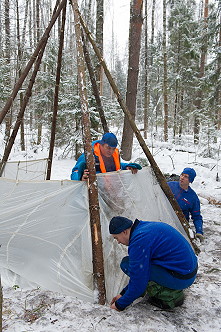
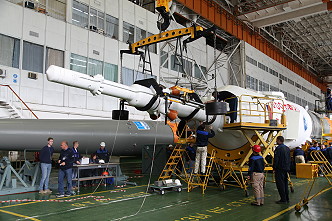
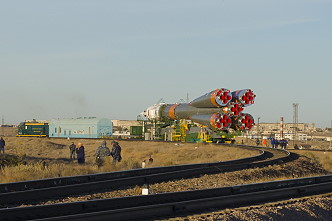
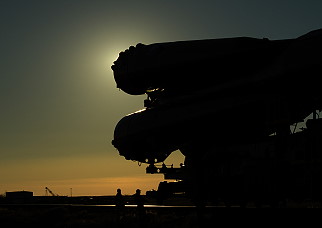
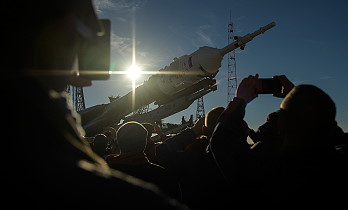
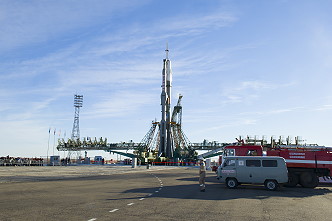
source of the training, rollout, launch and landing photos is Roscosmos |
|
 |
 |
 |
 |
 |
 |
 |
 |
| © |  |
Last update on July 26, 2025.  |
 |